How to Choose Skincare Stabilization Ingredients?

Time:2026-10-10 Author:Amelia
0%

Choosing skincare stabilization ingredients is not simply a matter of adding preservatives to a formula. It requires understanding water activity, pH, packaging, raw materials, and expected use conditions. A lightweight facial serum may face different risks from a rich body cream. Warm bathrooms, repeated finger contact, and an open jar can gradually challenge product stability. This explains why do skincare products need stabilization ingredients: they help protect quality, safety, texture, appearance, and performance throughout the product’s intended shelf life. Without suitable stabilization, a cream may separate, change color, develop an unpleasant odor, or support unwanted microbial growth.

A reliable selection process begins with the complete formula, not one fashionable ingredient. Preservatives, antioxidants, chelating agents, emulsifiers, and pH adjusters can work together, but their compatibility must be verified. Laboratory testing, including microbial challenge testing, stability studies, and packaging evaluation, provides stronger evidence than assumptions based on supplier claims. Small details matter. A dropper tip touching the skin can introduce contaminants repeatedly. Airless packaging may reduce exposure, but it does not remove every risk. Experience also teaches an uncomfortable lesson: a formula that looks stable after one month may still fail later. There is no universal stabilization system. Each choice should consider skin feel, ingredient interactions, consumer use, regional requirements, and validated safety data. This guide examines those decisions carefully, while recognizing that even well-designed formulas may need refinement after testing.
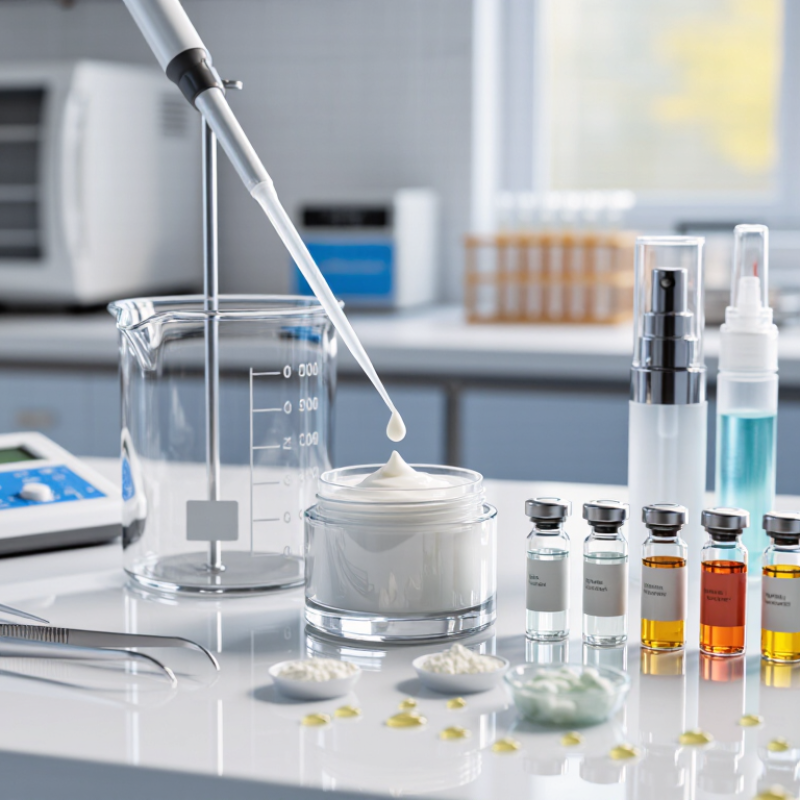
How to Choose Skincare Stabilization Ingredients?

Defining the Role of Stabilization Ingredients in Skincare

Stabilization ingredients are the quiet safeguards of a skincare formula. They help a cream remain safe, uniform, and effective during storage and daily use. Without them, oxygen, light, heat, and microorganisms can gradually change color, texture, scent, or performance. Their role is not to create an instant skin benefit. Their role is to protect the formula delivering that benefit.

Antioxidants can slow oxidation in oils and sensitive components. Chelating agents bind trace metals that may accelerate unwanted reactions. Preservative systems help control microbial growth, especially in water-based products. Emulsifiers and thickeners reduce separation between oil and water phases. Each ingredient addresses a different type of instability. Small details matter. A clear jar may still hide gradual chemical change, while a slight texture shift can signal a larger formulation problem.

Selection should follow the formula’s composition, packaging, pH, and intended use. Formulators typically review heat exposure, light exposure, freeze-thaw cycles, and long-term storage results. Microbial challenge testing can assess whether preservation works under controlled conditions. Packaging compatibility matters too, because airless pumps and open jars create different exposure risks. No single stabilizer solves every problem. An elegant formula may still need refinement after testing. I would not treat a long ingredient list as proof of stability. Reliable decisions come from evidence, documented testing, and careful observation over time.

Identifying Formula Instability Risks and Compatibility Needs

Formula instability rarely begins with an obvious failure. It may appear as a thin oil ring, small grains, fading color, or a changing scent. In formulation work, I start by mapping these risks before selecting stabilization ingredients. pH drift matters. An acid-sensitive active may lose performance when the formula becomes warmer. Electrolytes can weaken a thickener and create a watery texture. Light and oxygen may also accelerate color changes or odor development.

Compatibility is more than checking whether ingredients mix. A thickener can reduce emulsion stability when its charge conflicts with an emulsifier. A preservative system may perform poorly when pH, water activity, or surfactant levels change. I examine the full formula, including the active ingredients, botanical materials, fragrance components, and packaging contact surfaces. Small bench batches help reveal problems early. I check appearance, viscosity, pH, odor, and separation after heat, cooling, light exposure, and repeated temperature changes.

Still, laboratory screening has limits. One week of testing cannot represent every storage condition. I have seen a smooth sample become grainy after longer observation. That result deserves attention, not excuses. Stabilizers should be chosen for the specific risk, not added by habit. A formula may need an emulsifier, antioxidant, chelating agent, buffer, or protective packaging. The right choice depends on measured behavior and verified compatibility. Test more than once.

Selecting Antioxidants, Chelators, Preservatives, and pH Adjusters

How to Choose Skincare Stabilization Ingredients?

A stable formula needs more than one “strong” ingredient. Antioxidants slow oil oxidation, while chelators bind trace metals that accelerate color and odor changes. Preservatives control microbial growth in water-based products. pH adjusters keep the system within its safest working range.

In practical formulation work, I check the water phase, packaging, and consumer use pattern together. A vitamin-rich cream may need a lipid-soluble antioxidant and metal control. A foaming cleanser may require a different preservative strategy. The ISO 11930:2019 preservation standard relies on challenge testing, not guesswork. The SCCS Notes of Guidance, 12th revision, 2023, also stresses exposure, concentration, and product type. These references guide decisions, but they do not replace laboratory evidence. My early formulas sometimes looked stable for four weeks, then failed after heat cycling. That mistake was useful. Short testing can mislead.

Tips: Screen pH before choosing a preservative. Measure peroxide value in oils. Add chelators only after checking compatibility. Use accelerated stability studies at 40°C, then confirm results at room temperature. Record odor, color, viscosity, and microbial results at each interval. Do not assume natural positioning removes preservation risks. Packaging can reduce contamination, but it cannot rescue a weak formula. Recheck every claim against current safety assessments and regional requirements.

How to Choose Skincare Stabilization Ingredients?

Selecting antioxidants, chelators, preservatives, and pH adjusters

Antioxidants Chelators Preservatives pH Adjusters

The chart shows representative starting-use ranges expressed as percentage by weight. Antioxidants help slow oxidation, chelators bind trace metals that can accelerate degradation, preservatives control microbial growth, and pH adjusters bring the formula into its target pH range. Actual levels depend on the formula, packaging, water activity, regulatory requirements, and preservative efficacy testing. pH adjusters should be added gradually and titrated rather than dosed from a fixed percentage.

Evaluating Ingredient Safety, Performance, and Regulatory Requirements

How to Choose Skincare Stabilization Ingredients?

Stabilization starts with safety, not just texture or shelf life. Preservatives, antioxidants, chelators, and pH adjusters each solve different risks. A broad-spectrum preservative may fail when the formula contains oils, minerals, or botanical extracts. ISO 11930 challenge testing can reveal this weakness. In practice, I once trusted a promising laboratory result too quickly. Storage humidity later changed the outcome. That mistake reinforced one lesson: test the finished formula, not isolated ingredients.

Regulatory review must follow the target market. In the European Union, Regulation (EC) No. 1223/2009 requires a documented safety assessment and product information file. Its annexes also limit certain preservatives and concentrations. The SCCS Notes of Guidance, 12th revision (2023), emphasizes exposure, toxicology, and margin-of-safety calculations.

Commercial pressure matters, too. Cosmetics Europe reported approximately €88 billion in European retail sales in 2023. A failed batch can damage trust quickly. Compliance is not paperwork alone. It supports reliable performance.

Tips: Check the ingredient’s permitted use and concentration. Confirm compatibility with packaging. Measure pH, water activity, odor, and color over time. Use ISO 22716 principles for controlled production. Record every adjustment. Do not assume “natural” means safer. Shortcuts become expensive.

Testing Stability and Optimizing the Final Skincare Formula

Choosing skincare stabilization ingredients starts with the formula’s vulnerabilities, not a popular ingredient list. A water-rich emulsion may need an emulsifier, chelator, antioxidant, and preservative system. Each choice must match pH, oil load, packaging, and intended use. I record these constraints before laboratory trials. Small changes matter. A chelator can improve preservative performance, yet it may affect sensory qualities or compatibility. Stabilizers should also be assessed for irritation potential and regulatory suitability in the target market. That review cannot be skipped.

I divide samples into controlled stress groups: room temperature, elevated heat, refrigeration, freeze-thaw cycles, and light exposure. I inspect appearance, odor, color, pH, viscosity, and phase separation at scheduled intervals. A centrifuge test can reveal weakness quickly, but it does not replace real-time aging. Microbiological testing and preservative efficacy testing are essential for water-based products. I use retained samples and calibrated instruments, then compare results against predefined acceptance limits. Keep records. A single attractive jar proves little. Packaging compatibility deserves equal attention. Pump components, liners, and caps can absorb ingredients, leak, or introduce air. Test the filled package, not only the bulk formula.

Optimization works best through small, controlled adjustments. Change one variable at a time when possible, such as chelator level, emulsifier ratio, antioxidant dose, or pH. Then repeat the stress panel. A formula may survive heat but fail after repeated opening. That result is useful, not convenient. I have learned that faster screening can create false confidence when samples are too small or testing periods are too short. Final approval should combine stability data, safety assessment, manufacturing checks, and clear use instructions. Leave room for doubt. Reliable formulas earn confidence through evidence, not assumptions.

How to Choose Skincare Stabilization Ingredients? - Testing Stability and Optimizing the Final Skincare Formula

Stabilization Ingredient Primary Function Typical Starting Level Key pH or Formula Conditions Best-Suited Product Types Compatibility Considerations Recommended Stability Checks
Phenoxyethanol Broad-spectrum preservative, particularly useful against many Gram-negative and Gram-positive bacteria. 0.5–1.0% Generally effective across approximately pH 3–10; performance can vary with surfactants, glycols, and the overall formula. Emulsions Gels Cleansers Serums Often combined with a booster or a complementary preservative when stronger yeast and mold protection is required. Confirm applicable regional limits. Preservative efficacy testing, microbial limits testing, accelerated storage, freeze–thaw cycling, odor, color, and viscosity monitoring.
Ethylhexylglycerin Preservative booster with skin-conditioning properties; improves the performance of selected primary preservatives. 0.2–0.8% Works over a broad cosmetic pH range, but efficacy depends strongly on the primary preservative and formula composition. Creams Lotions Anhydrous Products May reduce the amount of a primary preservative needed, but should not automatically be treated as a complete preservative system. Challenge testing with the complete preservative system; evaluate irritation, odor, emulsion stability, and preservative distribution.
Sodium Benzoate Organic-acid preservative with activity against bacteria, yeast, and mold when sufficiently protonated. 0.2–0.5% Most useful in acidic formulas, commonly around pH 3–5.5; antimicrobial activity decreases as pH rises. Toners Gels Cleansers Water-Based Products Requires careful pH adjustment. Check compatibility with electrolytes, botanical extracts, and other organic acids. Measure final pH after one and four weeks; conduct preservative efficacy testing and monitor precipitation or crystal formation.
Potassium Sorbate Organic-acid preservative mainly used to control yeast and mold. 0.1–0.3% Most effective in acidic systems, generally below pH 6; activity declines significantly at higher pH. Acidic Serums Masks Botanical Formulas Often paired with a bacteria-focused preservative. It can be sensitive to poor solubilization and may crystallize if the formula is not optimized. Check solubility, pH drift, color change, yeast and mold challenge results, and stability after temperature cycling.
Caprylyl Glycol Multifunctional humectant and preservative booster that can improve microbial protection in combination systems. 0.3–1.0% Broadly compatible with many cosmetic pH ranges; effective distribution is important because it has limited water solubility. Emulsions Balms Creams May affect texture, slip, and emulsion viscosity. Excessive use can increase tackiness or cause processing difficulties. Evaluate emulsion particle size, viscosity, phase separation, sensory properties, and microbial challenge performance.
Disodium EDTA Chelating agent that binds trace metal ions and reduces metal-catalyzed oxidation and preservative interference. 0.05–0.20% Usually effective in water-containing formulas across a wide pH range; chelation strength depends on pH and the metal ion involved. Water-Based Serums Creams Cleansers Does not replace a preservative. It may improve the performance of some preservative systems and help reduce discoloration caused by trace metals. Compare color and odor against a non-chelated control; test peroxide value where relevant and assess preservative efficacy.
Sodium Phytate Plant-derived chelating agent used to bind trace metals and support color and oxidation stability. 0.05–0.20% Performance depends on pH, ionic strength, and the concentration of competing minerals in the formula. Natural-Positioned Formulas Serums Emulsions Validate performance against the chosen raw materials because botanical extracts and mineral-rich water can increase the chelation demand. Monitor color, odor, pH, oxidation markers, and appearance during accelerated and light-exposure testing.
Tocopherol Lipid-phase antioxidant that helps slow oxidation of oils and unsaturated emollients. 0.05–0.5% Requires adequate dispersion in the oil phase; antioxidant performance depends on oil type, oxygen exposure, light, and metal contamination. Facial Oils Creams Balms Protects oils from oxidation but is not a preservative for water-based microbial contamination. High levels may affect color or sensory feel. Measure odor, color, peroxide value, anisidine value where appropriate, and package compatibility under heat and light exposure.
Ascorbyl Palmitate Oil-soluble antioxidant that can support protection of the lipid phase and help reduce oxidative degradation. 0.05–0.2% Needs effective oil-phase dispersion; stability depends on temperature, oxygen, light, and the presence of transition metals. Oil Serums Creams Balms May require a suitable carrier and careful heating control. It does not provide broad-spectrum antimicrobial preservation. Evaluate color, odor, peroxide value, active-content retention, and physical stability after heat, light, and freeze–thaw exposure.
Citric Acid / Sodium Citrate Buffer pH adjustment and buffering system that helps maintain the pH range required for preservative activity and ingredient stability. As required to target pH Commonly used to establish an acidic to mildly acidic pH, often approximately pH 3–6 depending on the formula. Toners Exfoliating Products Serums Cleansers Adjust gradually because pH affects skin feel, preservative performance, viscosity, color, and the stability of acids and botanical ingredients. Record pH at manufacture and during storage; test pH after dilution, temperature cycling, and contact with the final packaging.
Sodium Metabisulfite Reducing antioxidant used in selected water-based systems to limit oxidation of susceptible ingredients. 0.05–0.2% Performance depends on pH and oxygen exposure; sulfite chemistry can change during storage and should be validated in the final formula. Water-Based Products Sensitive Actives May cause sensitivity concerns for sulfite-sensitive users. Assess odor, compatibility, regulatory requirements, and the need for appropriate labeling. Monitor active retention, color, odor, sulfite content where relevant, pH, and stability in the intended package.

FAQS

What is the main purpose of stabilization ingredients in skincare?

They help a formula remain uniform, safe, and effective during storage and daily use. They protect the intended benefit.

How do antioxidants support a skincare formula?

Antioxidants slow oxidation in oils and sensitive ingredients. This can reduce unwanted odor, color changes, and performance loss.

Why are chelating agents included?

They bind trace metals that may accelerate chemical reactions. Even tiny metal residues can matter.

What do preservatives help control?

Preservative systems help limit microbial growth, especially in water-based products. Their performance depends on pH, water activity, and the full formula.

How do emulsifiers and thickeners improve stability?

Emulsifiers help oil and water remain combined. Thickeners support texture and reduce separation. Compatibility still requires testing.

What signs may indicate formula instability?

Watch for an oil ring, small grains, fading color, changing scent, or a watery texture. A smooth sample can still fail later.

How does packaging affect formula stability?

Open jars expose formulas to more air and repeated contact. Protective pumps may reduce exposure. Packaging compatibility must be tested.

What testing can reveal stability problems?

Check appearance, viscosity, pH, odor, and separation after heat, cooling, light, and temperature changes. Microbial challenge testing can assess preservation.

Can one stabilizer solve every formulation problem?

No. Different risks may require antioxidants, buffers, chelating agents, emulsifiers, or protective packaging. Testing is imperfect.

Is a long ingredient list proof of stability?

No. Reliable decisions need documented testing and repeated observation. One week is not enough.

Conclusion

Skincare stabilization ingredients help preserve a formula’s safety, texture, appearance, and performance throughout its intended shelf life. To understand why do skincare products need stabilization ingredients, formulators must consider risks such as oxidation, microbial growth, unwanted color or odor changes, pH drift, ingredient separation, and interactions between active components. The right approach begins with identifying the formula’s vulnerabilities and compatibility requirements rather than adding stabilizers automatically.

A balanced system may include antioxidants to slow oxidation, chelators to manage trace metals, preservatives to control microbial contamination, and pH adjusters to maintain an environment suitable for both the product and the skin. Each ingredient should be assessed for safety, effectiveness, concentration limits, sensory impact, and applicable regulatory requirements. Finally, the complete formula should undergo stability testing under different temperature, humidity, light, and usage conditions. Test results can guide adjustments to ingredient levels, packaging, and processing methods, helping create a reliable, user-friendly skincare product.

Amelia

Amelia

Amelia is a seasoned marketing professional with a wealth of expertise in our company’s core offerings. With an unwavering passion for driving growth and innovation, she plays a pivotal role in shaping our marketing strategies and enhancing brand visibility. A key aspect of her responsibilities......