How to Choose the Best Anti Acne Raw Materials in China?

Time:2026-10-22 Author:Liam
0%

Choosing anti-acne raw materials in China requires more than comparing prices. It requires evidence, traceability, and practical formulation judgment. The Global Burden of Disease Study 2019, published in JAMA Dermatology, estimated that acne affected about 9.4% of the global population. The demand is substantial. So is the responsibility.

This guide explains how to choose raw materials for anti-acne formulations through a quality-focused lens. Suitable options may include salicylic acid, niacinamide, zinc compounds, and botanical ingredients. Each material needs a defined purpose. Review identity, assay, impurity limits, microbiological quality, solubility, pH behavior, and storage conditions. A clean certificate of analysis is only the starting point. Request batch records, safety data sheets, allergen information, and stability evidence. Suppliers following ISO 22716 principles usually provide stronger manufacturing controls, although certification alone cannot guarantee performance.

China’s National Medical Products Administration provides important guidance for cosmetic safety and efficacy-claim evaluation. Product developers should verify current requirements before making acne-related claims. Independent laboratory testing can help confirm purity and formulation compatibility. Small pilot batches are useful. They reveal sediment, odor changes, color shifts, or irritation risks before commercial production. Very practical details matter, such as whether a powder disperses smoothly after ten minutes of mixing.

No supplier is perfect. I have seen attractive specifications hide weak documentation. That is a warning. Price should not outweigh reproducibility, regulatory readiness, and transparent communication. A better sourcing decision combines laboratory results, supplier audits, and real formulation experience. Even then, assumptions deserve review. Acne is complex, and one raw material rarely solves every consumer concern.
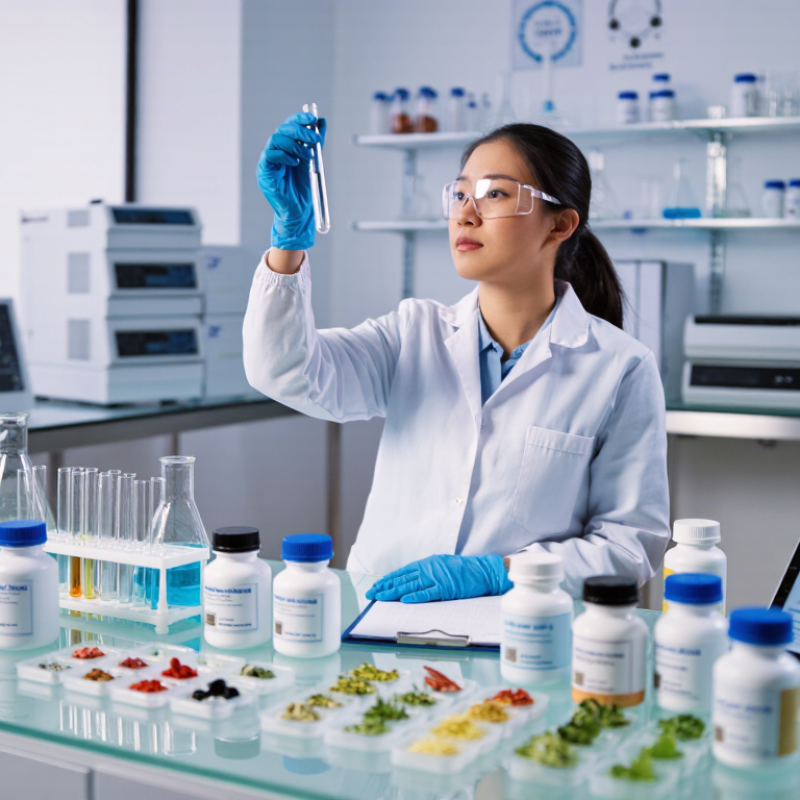
How to Choose the Best Anti Acne Raw Materials in China?

Define Anti-Acne Raw Materials and Their Skin Benefits

Anti-acne raw materials are functional cosmetic ingredients used to support clearer, calmer skin. They may reduce excess oil, unclog pores, or soothe visible redness. Common options include salicylic acid, niacinamide, zinc PCA, and azelaic acid. Each ingredient has a different role.

Salicylic acid helps loosen dead skin inside pores. It suits oily, congestion-prone skin when used at a controlled level. Niacinamide can support the skin barrier and reduce the appearance of excess sebum. Zinc PCA may help balance oil while providing a lightweight skin feel. Azelaic acid is valued for calming blemish-prone skin and improving uneven-looking tone. Benefits depend on purity, concentration, pH, and the finished formula.

Quality begins with supplier evidence. Request a specification sheet, certificate of analysis, impurity limits, stability data, and traceability records. Check whether the material remains consistent after storage in heat and humidity. A clean white powder is not automatically a reliable ingredient. Testing matters. In practice, formulators should review particle size, odor, solubility, and compatibility with preservatives. Skin tolerance must also be assessed through appropriate safety testing.

No ingredient works equally for everyone. That is easy to overlook. A strong active may irritate sensitive skin, especially in a poorly balanced formula. When choosing suppliers in China, compare technical support, batch consistency, documentation quality, and communication speed. The cheapest quotation can become expensive after reformulation. Supplier audits are useful, but they are not perfect.

Identify Key Selection Criteria for Acne-Fighting Ingredients

How to Choose the Best Anti Acne Raw Materials in China?

Selecting acne-fighting ingredients requires more than comparing prices. The American Academy of Dermatology reports that acne affects up to 85% of people aged 12 to 24. This demand makes evidence essential. Review clinical support, recommended use levels, skin tolerance, and target symptoms.

Salicylic acid may help unclog pores, while niacinamide can support oil control and barrier comfort. However, results depend on the complete formula, not one active alone.

Stability is equally important. Ask Chinese suppliers for assay results, impurity profiles, microbiological tests, and batch traceability. Check solubility, particle size, odor, color, and compatibility with preservatives. China’s National Medical Products Administration requires cosmetic safety assessments and supporting ingredient information. Suppliers should provide current documentation, not outdated certificates.

Low cost can be attractive. It can also hide inconsistent quality. I have seen specifications look impressive while pilot batches behaved differently. That weakness deserves attention.

Tips:

Request samples from at least two batches. Test accelerated stability and pH compatibility before purchasing. Compare the supplier’s data with peer-reviewed studies and regulatory records.

The European Academy of Dermatology and Venereology emphasizes tolerability when managing acne-prone skin. Therefore, avoid judging an ingredient only by its strongest laboratory result.

A mild, stable material may perform better in daily use. Reflect carefully. Fancy claims are not proof.

Compare Common Anti-Acne Raw Materials Available in China

How to Choose the Best Anti Acne Raw Materials in China?

China offers several practical anti-acne raw materials, but they do not perform equally. Salicylic acid suits oily skin and clogged pores. It exfoliates inside follicles and supports sebum control. Niacinamide is gentler and helps strengthen the skin barrier. A 2–5% level is often easier to formulate than higher concentrations. Zinc PCA may reduce surface oil, although its clinical evidence remains less consistent. The Global Burden of Disease Study 2019 reported acne as affecting roughly 9% of the global population. That scale makes tolerability important, not just quick results.

Azelaic acid is useful for acne-prone skin and post-inflammatory marks. However, its solubility can create texture problems in water-based formulas. Tea tree oil may offer antimicrobial support, but oxidation and irritation require careful testing. The American Academy of Dermatology recommends ingredients such as salicylic acid and azelaic acid for selected acne concerns. China’s NMPA technical standards and ingredient catalogues must also be checked before product development. Permitted concentration, product category, and claim wording can change the compliance risk.

My practical choice is not always the strongest active. A stable 2% salicylic acid formula may outperform a poorly designed high-load formula. Laboratory testing should include pH, viscosity, microbial limits, and accelerated stability. I would also question supplier claims based only on purity data. Purity is not clinical proof. This is where many sourcing decisions become too optimistic. Evaluate particle size, residual solvents, batch consistency, and supporting human-use evidence from the supplier.

Verify Quality, Safety, Suppliers, and Regulatory Compliance

How to Choose the Best Anti Acne Raw Materials in China?

Acne affects up to 50 million Americans annually, according to the American Academy of Dermatology. Its data also shows that acne affects about 85% of people aged 12–24. This demand makes raw material selection more than a price discussion. Request a current Certificate of Analysis, Safety Data Sheet, allergen statement, and batch traceability records. Check assay results, heavy metals, residual solvents, microbial limits, and storage conditions. One missing document matters.

Test the material against a defined specification, not only the supplier’s brochure. For botanical ingredients, review pesticide residues, identity testing, and contamination controls. For acids or active powders, confirm concentration, particle size, impurities, and stability under heat and humidity. Independent laboratory testing adds confidence. It also exposes uncomfortable differences between samples and paperwork.

Supplier verification requires an on-site audit or credible third-party assessment. Look for ISO 22716-based practices, calibrated equipment, environmental controls, change-control procedures, and documented corrective actions. Request representative samples from several batches. A perfect sample proves little. My own review can still miss a weak process, so I would require ongoing batch testing. Regulatory checks should match the destination market, including China’s NMPA requirements, the EU Cosmetics Regulation 1223/2009, or applicable United States rules. Ingredient names, restricted concentrations, safety assessments, claims, and product records must align. Cost pressure is real, but undocumented shortcuts create greater risk.

How to Choose the Best Anti-Acne Raw Materials in China?

The chart shows the number of practical verification points in a structured procurement checklist for anti-acne raw materials. Quality covers identity, assay, impurities, and microbiological specifications; safety covers heavy metals, residual solvents, and toxicological documentation; supplier review covers GMP evidence, batch traceability, and change control; regulatory review covers ingredient-list status, restricted-substance screening, and China market compliance documentation.

These are checklist-point counts, not market-share or supplier-performance statistics. Final acceptance should be based on the current batch COA, SDS, specification, test reports, traceability records, and applicable Chinese cosmetic requirements, including NMPA regulations and the Safety Technical Standards for Cosmetics.

Assess Formulation Fit, Cost, and Long-Term Supply Stability

Choosing the best anti-acne raw materials in China starts with formulation fit, not the lowest quotation. Request the INCI name, assay, impurity profile, particle size, microbiological limits, and recent CoA. For salicylic acid, the U.S. FDA OTC Monograph M006 permits 0.5–2% in acne products. Benzoyl peroxide is listed at 2.5–10%, where applicable. Local regulations may differ. Check the target market before testing.

Run compatibility trials with your base, preservatives, packaging, and fragrance. Observe color, odor, viscosity, pH, and crystal formation after heat and freeze-thaw cycles. A raw material may pass its CoA yet destabilize the finished gel. That happens.

Keep at least three pilot batches from different lots. Record yield loss and rework, because a cheap kilogram can become expensive after rejects. A 2024 chemical industry outlook from Deloitte also highlights continuing pressure from energy, logistics, and production costs.

Supply stability deserves equal attention. UNCTAD’s Review of Maritime Transport 2023 states that ships carry over 80% of global merchandise trade by volume. Port disruption can therefore affect delivery time and landed cost. Ask Chinese suppliers about dual production sites, safety stock, lead times, export documents, and change-control notices. Verify batch consistency through independent testing. Do not rely on one successful sample. A supplier’s sales promise is not a continuity plan. Examine audit records, capacity evidence, and three to six months of delivery history before approving a long-term contract.

FAQS

What should I check before choosing an acne-fighting raw material?

Review clinical evidence, recommended use levels, skin tolerance, and target symptoms. Do not judge quality by price alone. Strong claims need proof.

Which ingredients may suit oily or clogged skin?

Salicylic acid may help clear pores and manage surface oil. Niacinamide can support barrier comfort and oil balance. The full formula still matters.

Is a higher active concentration always more effective?

No. A stable, moderate-strength formula may perform better than a poorly designed high-load formula. Stronger is not always better.

What supplier documents should I request?

Ask for recent assay results, impurity profiles, microbiological tests, particle size, and batch traceability. Request current certificates and recent test reports.

How can I test material consistency?

Request samples from at least two batches. Compare color, odor, solubility, and particle size. One successful sample proves very little.

What formulation tests are important?

Test pH, viscosity, microbial limits, preservative compatibility, and accelerated stability. Use heat and freeze-thaw cycles. Watch for crystals, odor changes, or separation.

What problems can certain acne ingredients create?

Azelaic acid may cause texture issues in water-based formulas. Tea tree oil can oxidize or irritate sensitive skin. Solubility deserves practical testing.

How should I evaluate long-term supply stability?

Check lead times, safety stock, production capacity, export documents, and change-control procedures. Review several months of delivery records. Sales promises are not enough.

How should cost affect the purchasing decision?

Compare the total cost, including rejects, rework, testing, shipping, and delays. A cheap kilogram can become expensive. I may still underestimate hidden costs.

How can I reduce regulatory and safety risks?

Confirm permitted uses, concentration limits, product category, and claim wording for the target market. Keep complete safety records and review them regularly.

Conclusion

Choosing effective anti-acne raw materials in China requires more than selecting ingredients known for reducing breakouts. A well-informed approach begins by understanding how each material supports clearer skin, such as controlling excess sebum, reducing inflammation, limiting the growth of acne-related microorganisms, or helping unclog pores. The keyword “how to choose raw materials for anti-acne formulations” reflects the need to evaluate ingredient efficacy, skin compatibility, stability, purity, and suitability for the intended product type and target users.

Buyers should compare common options according to performance, evidence, safety limits, sensory properties, and formulation behavior. It is also essential to verify supplier qualifications, testing records, traceability, documentation, and compliance with applicable cosmetic regulations. Finally, assess total cost, processing requirements, minimum order quantities, lead times, and long-term supply stability. A balanced decision that combines quality, safety, formulation fit, regulatory responsibility, and reliable sourcing can support consistent anti-acne product development and dependable results.

Liam

Liam

Liam is a dedicated marketing professional with a profound expertise in the industry, where he excels at highlighting the unique advantages of our core products. With a keen understanding of market trends and consumer needs, Liam frequently updates our company’s professional blog, providing......